Long-Tail Keywords: Why They Matter for SEO (Beginner Guide)
Ranking on Google is getting harder. Short, competitive keywords are difficult to rank for, especially for new websites. That’s where long-tail keywords help.
In this guide, you’ll learn what long-tail keywords are, why they matter, and how to use them to improve SEO performance.
If you are new to keyword research, read our Keyword Research Guide.
What are Long-Tail Keywords?
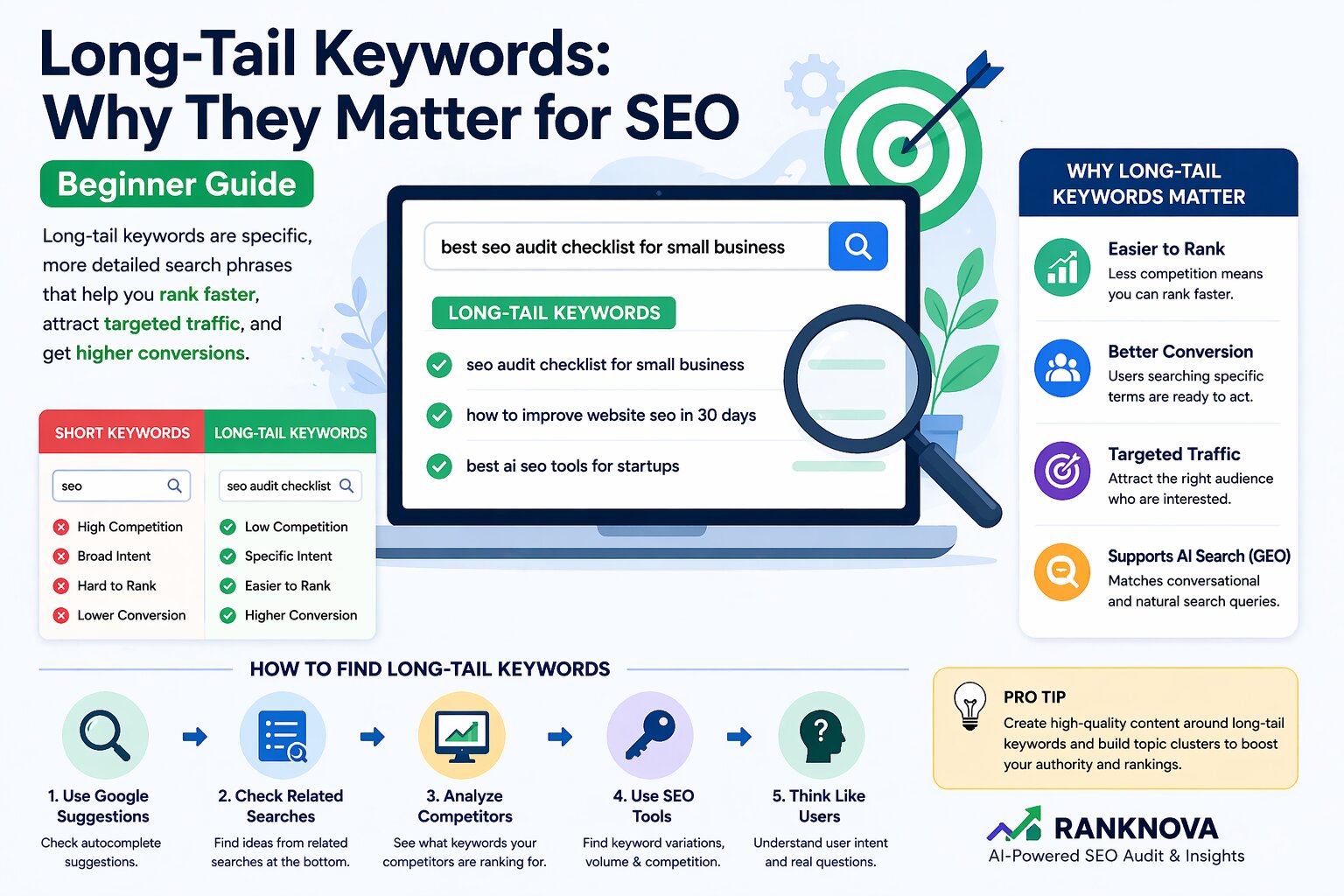
Long-tail keywords are longer and more specific search phrases. They usually contain 3 or more words.
Examples:
- SEO audit checklist for small business
- how to improve website SEO in 30 days
- best AI SEO tools for startups
These keywords target specific user intent.
Long-Tail vs Short Keywords
Short Keywords
Example: SEO
- High competition
- Broad intent
- Hard to rank
Long-Tail Keywords
Example: SEO audit checklist for small business
- Low competition
- Clear intent
- Easier to rank
Long-tail keywords are more targeted.
Why Long-Tail Keywords Matter
1. Easier to Rank
Long-tail keywords have less competition. New websites can rank faster.
2. Better Conversion
Users searching long-tail keywords have clear intent. They are more likely to take action.
3. Targeted Traffic
Long-tail keywords bring relevant visitors. Better traffic = better results.
4. Supports AI Search (GEO)
AI search tools prefer specific queries. Long-tail keywords match conversational search patterns. Learn more in What is GEO.
How to Find Long-Tail Keywords
1. Use Google Suggestions
Start typing a keyword in Google and look at suggested searches. These are real user queries.
2. Check Related Searches
Scroll to the bottom of Google results to find related keyword ideas.
3. Analyze Competitors
Check competitor blogs to identify keywords they are targeting.
4. Use SEO Tools
SEO tools help find keyword opportunities by showing variations, search volume, and competition levels.
5. Think Like Users
Ask: What problem are users solving? What questions are they asking? User-focused keywords perform better.
How to Use Long-Tail Keywords
1. Use in Title
Include the keyword in the title. Example: Long-Tail Keywords Guide for Beginners
2. Use in Headings
Add keywords in H2 and H3 tags. Structured content improves SEO. Follow our On-Page SEO Checklist.
3. Use Naturally in Content
Do not overuse keywords. Use them naturally within the prose.
4. Create Dedicated Content
Each long-tail keyword should ideally have its own content (one blog per keyword) with a focused topic and clear structure.
5. Build Topic Clusters
Create multiple related articles to improve authority. See our guide on Improving SEO in 30 Days.
Common Mistakes
Avoid these pitfalls:
- Targeting only broad keywords
- Ignoring search intent
- Keyword stuffing
- Writing low-quality content
Learn more in Common SEO Mistakes.
How Ranknova Helps
Ranknova helps identify keyword opportunities and content gaps. It helps:
- Find missing topics
- Improve content structure
- Optimize SEO performance
Conclusion
Long-tail keywords are one of the easiest ways to improve SEO. They help you rank faster, attract targeted traffic, and improve conversions. Start using long-tail keywords in your SEO strategy today.
CTA
👉 Use Ranknova to find keyword opportunities and improve your SEO strategy.
FAQ
Frequently Asked Questions
Quick answers pulled directly from this article for easier reading and better sharing previews.
What are long-tail keywords?
Long-tail keywords are specific search phrases with 3 or more words.
Why are long-tail keywords important?
They are easier to rank and bring targeted traffic.
How do I find long-tail keywords?
Use Google suggestions, tools, and user intent analysis.
Are long-tail keywords better than short keywords?
They are easier to rank and often convert better.